
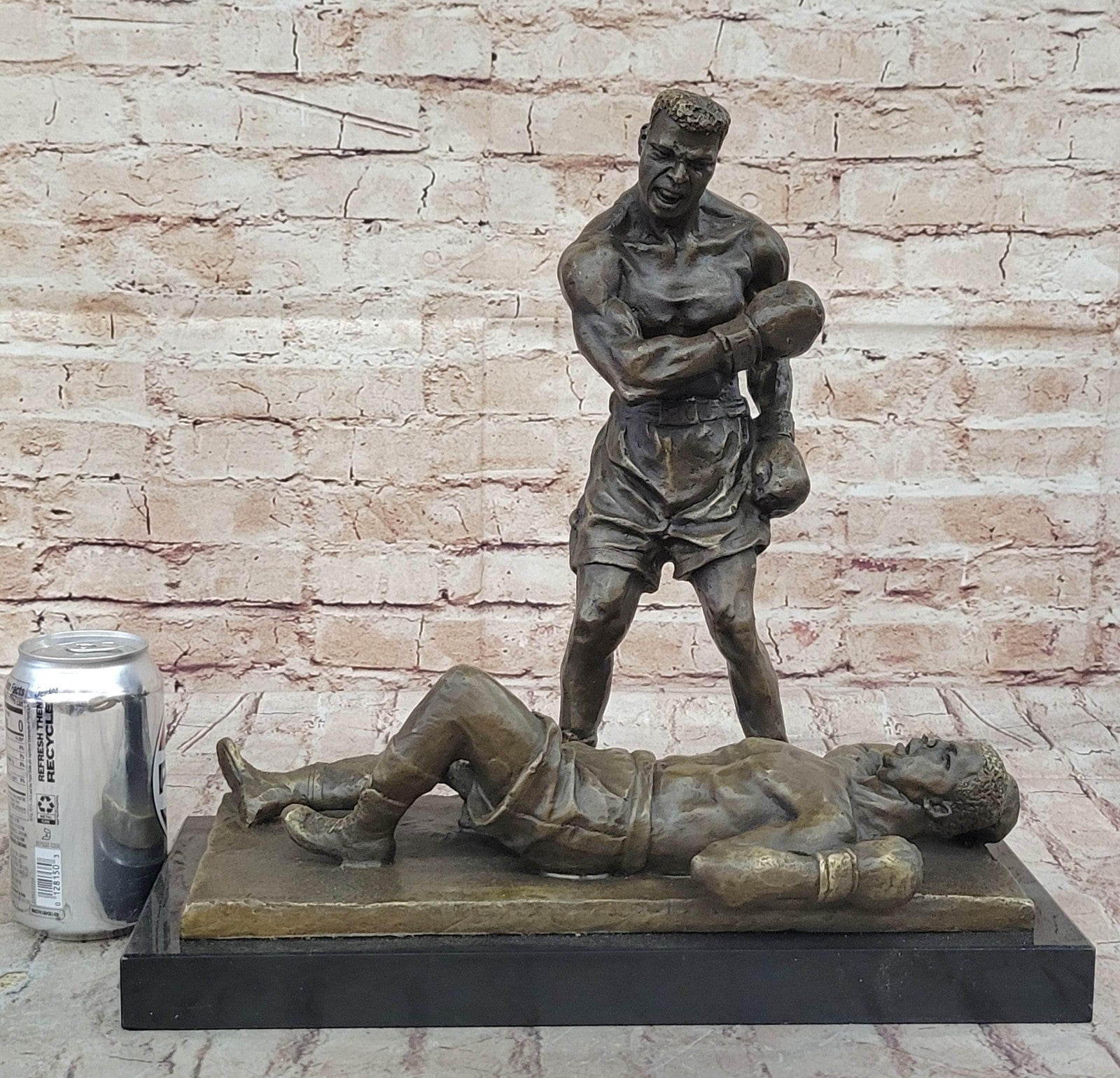
You have found the perfect bronze sculpture. The patina is breathtaking. The form moves you. You bring it home, place it on the mantle… and it wobbles.
Or worse: six months later, the bronze separates from its marble base entirely, crashing to the floor.
A sculpture is only as good as its connection to the ground. And how a bronze is attached to its marble base separates fine art from a furniture store accident waiting to happen.
Let us pull back the curtain on the three methods of marble base integration, and which one you should demand.
Why Marble? Why Not Just Bronze?
Bronze sculptures are heavy. A solid bronze figure might weigh 50, 100, or 500 pounds. That weight needs a stable, beautiful platform.
Bronze has been used for sculpture for more than 5,000 years, largely because of its strength, durability, and resistance to corrosion, making it one of the most trusted materials in monumental art.
Marble is the traditional choice because:
-
It adds visual elegance (white Carrara marble, black Nero Marquina, green Guatemala)
-
It lowers the center of gravity
-
It protects the bronze from direct floor contact (moisture, scratches)
-
It elevates the piece to viewing height
But a marble base is not just a "stand." The stability of marble base bronze sculptures depends on a secure structural marriage between bronze and stone. And there are three ways to arrange that marriage.
The Three Fixing Methods: Ranked
Method #1: The Epoxy-Only Disaster (Avoid at All Costs)
Some cheap sculptures simply glue the bronze to the marble with epoxy or construction adhesive. No pins. No bolts. Just glue.
How it works: Squirt adhesive. Press the bronze down. Wait to dry.
The problem: Epoxy degrades over time, especially with temperature changes. A bronze sculpture expands and contracts at a different rate than marble. The glue eventually cracks. The bronze falls.
Stability test: Try to twist the bronze on its base. If it moves even slightly, it is glued only. Return it immediately.
Used by: Mass-produced, machine-made decor. Never by serious foundries.
Method #2: The Hidden Threaded Rod (Better, But Not Perfect)
This method involves drilling into both the bronze and the marble, inserting a threaded metal rod (or bolt), and securing it from inside the bronze or underneath the marble.
How it works: A stainless steel rod is epoxied into the marble. The bronze has a matching threaded hole. You screw them together.
The pros: Stronger than glue alone. Can theoretically be disassembled. Hides all hardware.
The cons: Over time, the epoxy holding the rod in the marble can fail. Vibration (doors slamming, footsteps) can loosen the threaded connection.
Stability test: Lift the sculpture by the bronze only. If the marble base hangs on securely without wobbling, this method is acceptable for smaller pieces (under 30 pounds).
Used by: Mid-range galleries and competent production studios.
Method #3: The Through-Bolt with Counterbore (Museum Standard)
This is how museums demand it. This is permanent.
How it works:
-
The bronze is cast with integral threaded "bosses" (reinforced pads) on its bottom surface.
-
The marble base is precisely drilled all the way through.
-
Heavy-duty stainless steel bolts pass through the marble and thread into the bronze's bosses.
-
The bolt heads are recessed into counterbores (wider holes) on the bottom of the marble.
-
Those counterbores are filled with marble plugs or felt pads, invisible from any viewing angle.
The pros:
-
Mechanical connection, not just chemical (glue). Bolts will never "un-cure."
-
Serviceable. In 100 years, a conservator can remove and replace the base.
-
Handles massive weight and temperature swings.
The cons: More expensive. Requires precision drilling and skilled installation. Worth every penny.
Stability test: Flip the sculpture over (carefully, on a soft surface). You should see bolt heads or plugs. No plugs? No bolts? No confidence.
The Three Stability Tests You Must Perform
Before you buy any bronze on a marble base, run these tests. Do not be shy. A serious gallery or foundry will welcome them.
Test #1: The Wobble Test
Place the sculpture on a perfectly flat surface (granite countertop or glass table). Press down on each corner of the marble base. Does it rock? Even 1mm of rock means the base is not flat. Reject it.
Test #2: The Torque Test
Grip the bronze firmly (not the base). Try to twist it left and right gently. If it moves relative to the marble, the connection is loose. Walk away.
Test #3: The Lift Test
Lift the entire sculpture by the bronze only. The marble base should remain absolutely flush, no gap, no sagging, no clicking sounds. If the base shifts, the fixing method has failed.
Conclusion: A Sculpture Is a System, Not a Statue
A bronze is not finished at the foundry. It is finished when it is securely, permanently, and beautifully attached to its base. A loose sculpture is a hazard. A fallen sculpture is a tragedy. A glued sculpture is a betrayal.
At European Bronze, we treat the marble base with the same respect as the bronze itself. Every one of our marble base bronze sculptures uses through-bolt, museum-standard mounting. Stainless steel. Counterbored. Plugs. No shortcuts.
If you're looking for authentic bronze sculptures built to last for generations, explore our collection and experience the difference that expert craftsmanship makes.