
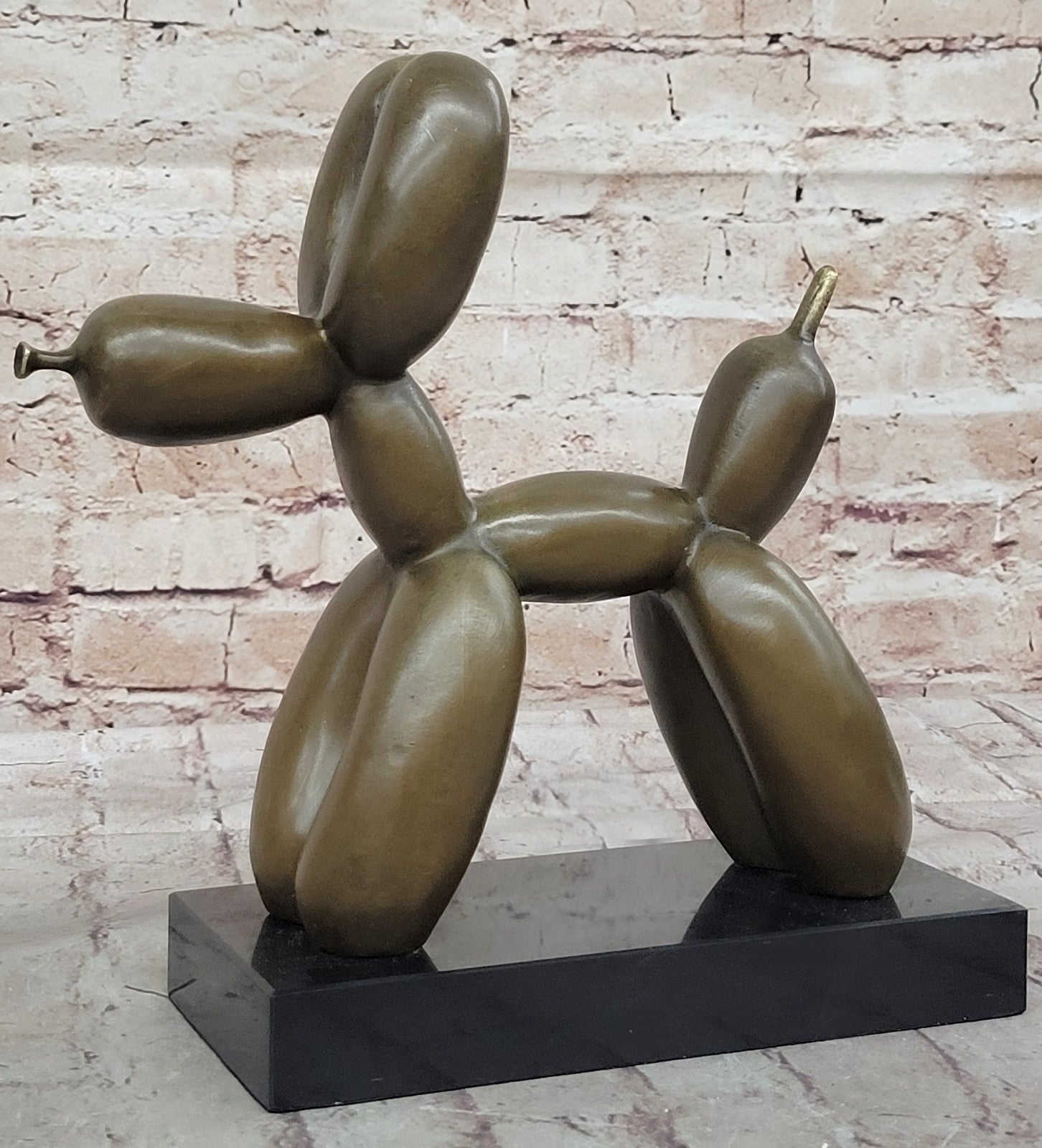
At first glance, a bronze sculpture looks like a bronze sculpture. Whether it sits on a gallery pedestal or a corporate lobby floor, the rich, warm patina and the promise of permanence are there.
But look closer.
There is a seismic difference between a piece of art poured by machine on an assembly line and one coaxed into life by human hands. In a world obsessed with speed and uniformity, the art of the foundry is fighting back.
Here is the truth about handmade versus machine-made bronze, and why the “flaws” of human hands are actually the greatest luxury you can buy.
The Core Difference: Soul vs Algorithm
Machine-Made (Casting): This typically involves industrial processes like sand casting or injection molding, automated by robots. The machine-made bronze sculpture follows a digital file (often scanned from an original). It is fast, consistent, and sterile. If you buy ten machine-made sculptures, you get ten identical items. They are products.
Handmade (Lost Wax): Lost Wax Casting is the 6,000-year-old process used by Michelangelo and Rodin. An artist sculpts an original in clay or wax. A foundry master then builds a ceramic shell around it by hand, melts out the wax, and pours molten bronze. Finally, a patina specialist uses fire and chemicals to "paint" the metal by hand. No two are ever truly identical.
The 5 Key Differences You Need to Know
1. The Texture (Micro-Details)
Machine-made bronze sculptures are "perfect." But that perfection is flat. Machines struggle to replicate the deep thumbprints, the tiny tooling marks, or the organic undercuts of wet clay.
Handmade bronze captures the gesture of the artist. You can see the speed of a brushstroke in the metal. You can feel the artist's energy. It has tactile depth.
2. The Patina (Color & Depth)
This is where machines fail miserably.
Machine: Uses spray-on lacquers or dip baths. The color is uniform, plastic-looking, and usually fades in UV light.
Handmade: A master patineur uses a torch and sprayers to apply oxides (cupric nitrate, ferric nitrate) to the hot metal. The color breathes. It has depth. It changes in the light like a living thing.
3. Weight & Structural Integrity
Machine-made hollow castings often have uneven wall thickness (thin spots that dent) or are filled with resin to fake the weight.
Handmade foundries use the “lost wax” method, ensuring perfectly consistent metal walls. The weight is genuine because the material is genuine.
4. The Rarity Factor
If your sculpture is machine-made, your neighbor probably has the exact same one from a catalog.
Handmade pieces come from a limited edition (e.g., 1/25). Even within an edition, the hand-applied patina ensures yours is a unique variation. You own an original artifact, not a clone.
5. Longevity
Machine-made bronze is often cut with cheaper alloys or has a thin "veneer" of bronze over fiberglass.
True handmade bronze is solid silicon bronze. It can survive outdoors for centuries. The Statue of Liberty is handmade bronze. Machines haven't been around long enough to prove they last 100 years.
Why "Handmade" is Superior
We often romanticize handmade things because it is harder. But pragmatically, handmade bronze is better because:
-
Emotional Resonance: You feel the human energy.
-
Investment Value: Handmade limited editions appreciate in value. Machine-made decor does not.
-
The "Wabi-Sabi" Factor: Tiny variations in the patina are not defects; they are the signature of the craftsman.
If you want a cheap ornament for a rental apartment, buy machine-made. If you want a future heirloom, a piece of history, or a conversation starter, go handmade.
Conclusion
Don't settle for a factory stamp when you could have a fingerprint.
At European Bronze, we don’t press a button and watch a robot work. We stoke furnaces. We carve wax. We sweat over patinas until the green hits that exact shade of Renaissance Verdigris.
If you want the weight, the warmth, and the soul of real artistry, you want what we make.
Ready to own a piece of history? Visit European Bronze and explore our collection of museum-quality, 100% handmade bronze sculptures. No resin. No shortcuts. Just bronze.