
Your garden is more than a patch of grass. It’s an outdoor room, a sanctuary, a statement. And the sculpture you place there? That’s the punctuation mark on your landscape’s personality.
But should you choose a sleek, contemporary bronze piece that challenges the eye? Or a weathered, vintage bronze that whispers stories of the past?
The answer isn’t about trends. It’s about soul, and how that soul interacts with your environment. Let’s break down the key differences between modern and vintage bronze garden sculptures, and help you decide which one belongs among your hydrangeas and hedges.
The Core Difference: Statement vs. Story
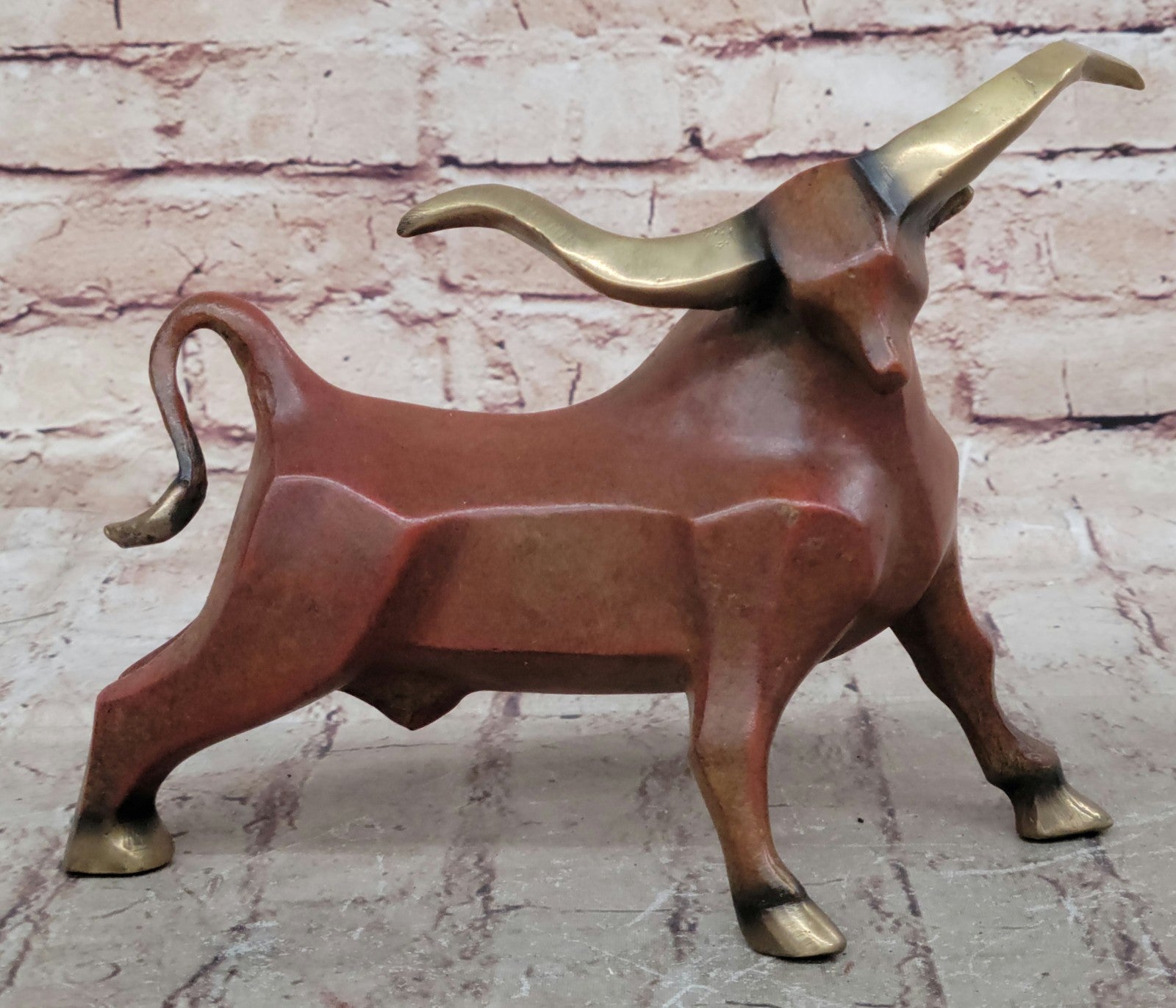
Modern bronze sculptures are about now. They feature clean lines, abstract forms, negative space, and bold finishes that command attention. They’re designed to make a statement.
Vintage bronze sculptures are about then. Often depicting figures, animals, or mythological subjects, they carry a sense of history and develop a natural patina over time that gives each piece unique character.
Their enduring appeal is reflected in today’s art market. Even amid rapid digital innovation, traditional art remains highly valued, paintings and sculptures accounted for 87% of the value of works sold above $1 million at auction in 2025, according to the Art Basel & UBS Global Art Market Report 2026.
Neither style is better. One will complement your space naturally; the other may feel out of place. The key is choosing the piece that fits the story your space is telling.
Key Comparison: Which Fits Your Garden?
1. The “Formal” Garden (Symmetry, Boxwoods, Gravel Paths)
Best fit: Vintage or Neoclassical bronze.
Why: Formal gardens echo the great European estates of the 17th–19th centuries. A vintage bronze, a patinated cherub, a mythological figure, or an aging deer, feels born there. It reinforces tradition.
Modern risk: A sharp, abstract modern piece in a formal setting can look like a crashed spaceship. Intentional? Sometimes. Harmonious? Rarely.
2. The “Naturalistic” or Woodland Garden (Ferns, Wildflowers, Winding Paths)

Best fit: Vintage bronze animal sculptures or rustically patinated modern organic forms.
Why: Nature doesn’t do straight lines. Vintage wildlife bronzes (frogs, foxes, herons) hide beautifully among ferns. Modern “biomorphic” sculptures, abstract shapes inspired by seeds, waves, or bones, also work well here, provided they have a natural patina.
What to avoid: High-polish, shiny modern bronze. It reflects light like a mirror in the woods, breaking the spell.
3. The “Minimalist” or Contemporary Garden (Concrete, Steel, Grasses, Clean Lines)
Best fit: Modern bronze.
Why: This is where modern shines. A tall, vertical abstract bronze or a low-slung geometric form acts as a focal point against a stark wall or a sweep of ornamental grass. Vintage bronze sculptures look out of place here, too fussy, too detailed.
Pro tip: Look for modern bronzes with a “black oxide” or “dark brown” patina. It absorbs light and feels architectural.
The Quality Question: Vintage vs. Modern Construction
Here’s the secret most dealers won’t tell you: Vintage doesn’t automatically mean better. And modern doesn’t automatically mean lesser.
But cheap modern bronze (machine-made, thin-walled, resin-filled) is garbage. And fake “vintage” (factory-aged with acid) is an insult.
Genuine Vintage Bronze: Handmade via lost wax casting. Solid wall thickness. Uneven, beautiful patina that has deepened over decades. Every scratch tells a truth.
Quality Modern Bronze: Also handmade via lost wax casting. The design is new, but the craft is ancient. A skilled modern sculptor uses the same techniques as a 19th-century foundry. The only difference is the aesthetic.
The red flag: If a “modern” or “vintage” piece looks too uniform in color, feels too light, or has a spray-on patina… It’s machine-made. Avoid it, regardless of the style.
Conclusion
Whether you lean toward a sleek modern monolith or a weathered vintage muse, one rule is absolute: the bronze must be authentic. No resin. No spray paint. No hollow factory knockoffs.
At European Bronze, we don’t care about trends. We care about the metal. Every sculpture we offer, whether inspired by modern abstraction or classical figurative art, is cast using the same 6,000-year-old lost wax method. By hand. By artisans. No machines stamping out copies.
We have purists who want a vintage look (and we’ll patina it to age gracefully over time). We have minimalists who want a sharp, modern edge (and we’ll deliver it with museum-grade precision).